This Recipe Respected My Time and You Should Know It
I did not approach this recipe with optimism, because optimism has burned me before. I approached it with caution, the kind you develop after too many weeknight dinners that promise ease and deliver chaos. When a recipe claims it will be quick, simple, or low-effort, I assume it is lying unless proven otherwise. Most recipes…
I did not approach this recipe with optimism, because optimism has burned me before. I approached it with caution, the kind you develop after too many weeknight dinners that promise ease and deliver chaos.
When a recipe claims it will be quick, simple, or low-effort, I assume it is lying unless proven otherwise. Most recipes underestimate prep time, overestimate attention span, and quietly expect you to care more than you realistically do after a full day of being a person.
This recipe did none of that, which is why it stood out immediately.
I made it on a regular weekday, not as a project and not as a treat, but because I needed dinner to exist without derailing the rest of my evening. I was not in the mood to multitask, improvise, or troubleshoot.
I needed instructions that made sense, steps that flowed logically, and a result that justified the time I gave it. Against all odds, everything worked exactly as written, and that alone felt worthy of documentation.
Why My Standards for Weeknight Cooking Are Extremely Specific
At this point in my life, my standards for weeknight cooking are not about creativity or self-expression. They are about efficiency without insult. I want recipes that acknowledge reality, including limited energy, limited patience, and the fact that I am not trying to prove anything to anyone at 7:30 p.m.
A recipe that respects your time understands that you may be hungry, distracted, and mildly irritable, and it does not punish you for that.
Most recipes fail this test early, either by introducing unnecessary steps, requiring too many dishes, or pretending that fifteen minutes of chopping is not still fifteen minutes of your life. This one passed quietly, without making a big deal about it, which I appreciate.

The Recipe That Didn’t Ask for More Than I Had
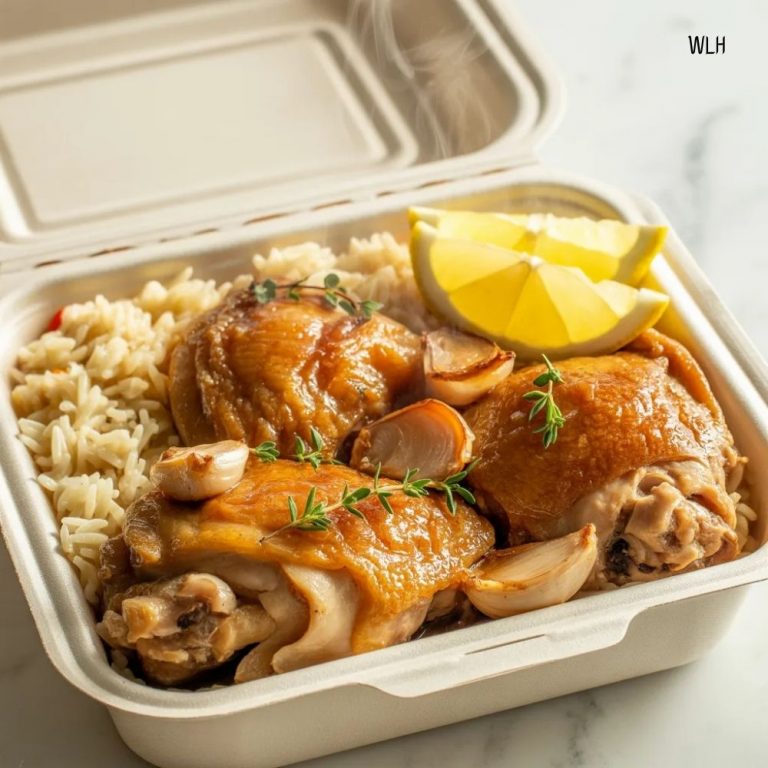
The recipe was one-pan lemon garlic chicken with potatoes, which already felt promising because it did not involve juggling multiple components or coordinating timing across different burners.
Everything cooks together, which immediately lowers the risk of something going wrong. The ingredient list was short and familiar, and nothing required special preparation beyond basic chopping.
I noticed right away that the recipe was written in a way that anticipated the order things should happen, not just listing steps because that’s how recipes usually do it.
Prep overlapped naturally with cooking time. The oven did most of the work. There were no surprise pauses where you suddenly need to do something urgent while something else burns.
That structural awareness is rare and deeply appreciated.
How the Prep Stayed Manageable Without Feeling Rushed
Prep was straightforward and limited to what was strictly necessary. Potatoes were cut into chunks that did not require precision. Garlic was smashed, not finely minced, which felt like a small kindness. The chicken was seasoned simply, without a marinade that required advance planning or emotional commitment.
Everything went into a single pan in a way that made sense visually and functionally. Nothing felt crowded. Nothing felt under-seasoned. I did not have to stop midway to reassess my life choices, which is my personal benchmark for success.
The Oven Did Its Job and So Did I
Once the pan went into the oven, my role shifted from active participant to light supervision, which is exactly where I want to be on a weeknight.
The recipe gave a realistic cooking time and did not require constant checking or flipping. I was able to clean up while it cooked, which meant the kitchen was already in decent shape by the time dinner was ready.
This is a detail that matters more than it should. A recipe that allows you to reset your space while it finishes is automatically more respectful than one that leaves you standing there, watching the clock.
When the Food Came Out Exactly as Promised
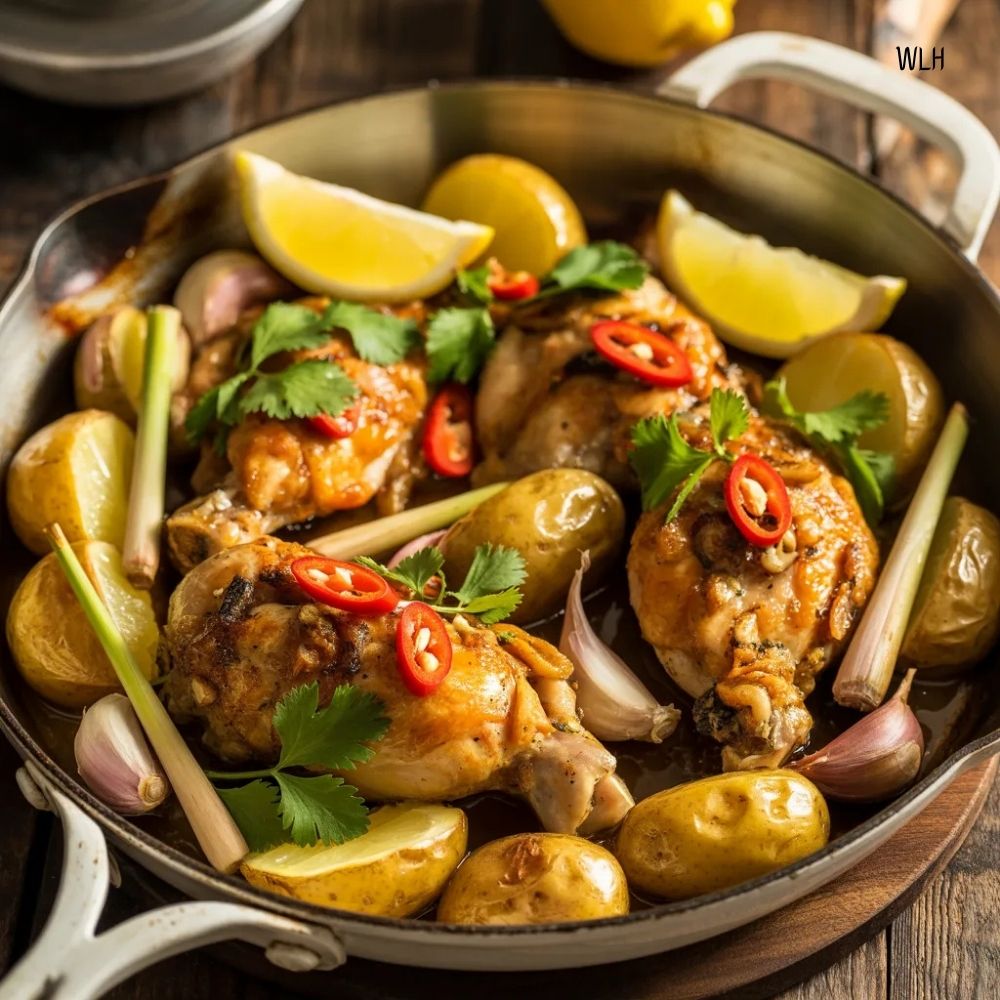
The chicken came out golden and cooked through without being dry. The potatoes were tender with crisp edges. The garlic had softened into the sauce instead of burning.
The lemon brightened everything without dominating. There were no weak elements, no parts that needed rescuing or adjusting at the last minute.
I did not have to add anything to make it better. I did not have to pretend it was fine. It was just good, in a reliable, unflashy way that felt earned.
That outcome is surprisingly rare.
The Recipe: One-Pan Lemon Garlic Chicken with Potatoes
This is the version I now keep in rotation for nights when I want dinner to work without drama.
Ingredients
- Bone-in, skin-on chicken thighs
- Baby potatoes or Yukon Golds, cut into chunks
- Garlic cloves, smashed
- Olive oil
- Lemon, sliced and juiced
- Salt and black pepper
- Dried oregano or thyme
- Optional fresh herbs for finishing
How I Make It Without Losing Momentum
I preheat the oven and line a large sheet pan or roasting pan with foil for easy cleanup, because convenience should extend beyond the cooking itself.
I toss the potatoes with olive oil, salt, pepper, and half the garlic, then spread them out on the pan to give them room to roast properly. The chicken gets seasoned simply and placed skin-side up among the potatoes, with lemon slices tucked around everything.
I drizzle a bit more olive oil over the top, sprinkle on herbs, and slide the pan into the oven. About halfway through, I give the potatoes a quick stir and spoon some of the pan juices over the chicken, which takes less than a minute and feels optional rather than mandatory.
When it comes out, I squeeze fresh lemon juice over everything and let it rest briefly before serving. That’s it. No extra steps. No hidden work.
What This Changed About How I Choose Recipes
This experience sharpened my awareness of how much bad recipes ask of you unnecessarily. I am now much quicker to abandon anything that feels inefficient or overly complicated without payoff. I trust my instincts more when something feels like it will be a hassle.
Good recipes do not need to prove themselves. They simply work.
There is something reassuring about a recipe that understands its role and does not try to exceed it. This dish is not trying to be impressive. It is trying to feed you well, on time, without friction. That clarity of purpose makes it successful.
I did not finish this meal feeling like I had accomplished something heroic. I finished feeling calm and fed, which is exactly the goal.
Final Takeaway
This recipe respected my time, and that alone makes it special. It did not ask for unnecessary effort, attention, or emotional investment. It delivered a solid meal without complicating my evening, and that is the highest praise I can give a weeknight dish.
When a recipe works smoothly from start to finish, without resistance or regret, it earns a permanent place in rotation. I do not need dinner to impress me. I need it to cooperate.
And this one did.