I Made This on a Bad Day and It Helped More Than Expected
ADVERTISEMENT I did not make this meal with healing in mind. I did not light a candle, set an intention, or decide to “channel my feelings into cooking.” ADVERTISEMENT I made it because I had a bad day in the specific way that drains your patience without giving you a clear reason to be upset,…
I did not make this meal with healing in mind. I did not light a candle, set an intention, or decide to “channel my feelings into cooking.”
I made it because I had a bad day in the specific way that drains your patience without giving you a clear reason to be upset, and I needed dinner to happen without escalating the situation further. This was not about self-care. This was about damage control.
The day had been long, uneven, and filled with minor annoyances that stacked quietly until my tolerance was gone. Just enough friction to make me tired in my bones and resentful of anything that required decision-making.
By the time I got home, I was irritable, hungry, and deeply uninterested in novelty, which is usually how mistakes happen if I am not careful.
So I decided to cook something extremely familiar, something that did not ask me to think creatively or prove competence, something that would unfold predictably if I followed a basic sequence of steps. I was not trying to feel better. I was trying not to feel worse.
Why I Chose This Dish Without Overthinking It
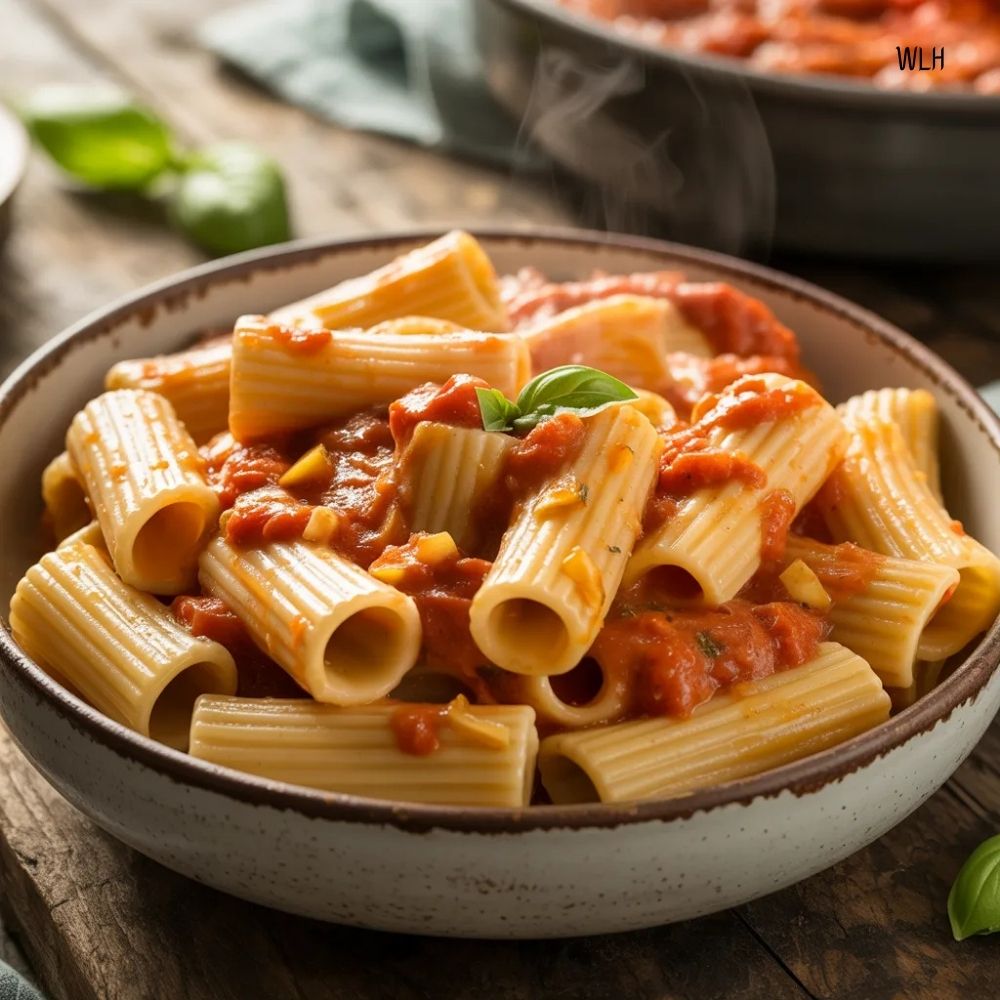
The dish was rigatoni with garlic, butter, tomato paste, and cream, which I know sounds simple to the point of being suspicious, but that was the appeal. I have made versions of this pasta enough times to trust it.
It uses ingredients I almost always have. It does not require precise timing. It forgives distraction. It delivers warmth and richness without demanding attention. Most importantly, it does not surprise you halfway through. On a bad day, surprises are the enemy.
I put a pot of water on the stove, more out of muscle memory than intention, and started cooking before my brain had time to argue with me. That alone was helpful, because it gave my hands something to do while my thoughts calmed down enough to stop narrating every inconvenience I had experienced in the last eight hours.
The Quiet Relief of Following a Familiar Rhythm
There is something grounding about repeating motions you already know, especially when your head feels loud. Filling a pot. Chopping garlic. Stirring butter until it melts without burning.
These actions do not require judgment. They are physical, contained, and finite, which makes them ideal when your emotional bandwidth is low.
As the pasta cooked, the kitchen began to smell like garlic and warmth instead of stress, and I realized I had stopped replaying my day in detail. I was still tired, but the edge had softened. I wasn’t happier. I was steadier. That was more than I expected.
How the Sauce Came Together Without Drama
The sauce itself is almost aggressively uncomplicated, which is why it works. Butter melts. Garlic softens. Tomato paste cooks down just enough to lose its raw edge.
Cream goes in slowly, turning everything into something cohesive and forgiving. Salt brings it together. Pasta water loosens it when needed.
Nothing in this process is fussy. Nothing punishes you for stepping away briefly. It rewards patience without demanding perfection. The sauce thickens when it’s ready. It does not rush you. It waits. That kind of cooperation feels rare on a bad day.
The Moment I Realized My Mood Had Shifted
The moment I noticed the shift was not when I tasted the sauce, although it was good in the comforting, no-notes way that matters here. It was when I realized my shoulders had dropped and my breathing felt slower. I had not checked my phone in a while. I was focused, but not tense.
Cooking had quietly absorbed the excess energy that had nowhere else to go.
This wasn’t emotional processing in a cinematic sense. It was regulation. My body had moved from agitation into something closer to neutral, and it happened without me trying to fix anything.
Sitting Down to Eat Changed the Equation Further
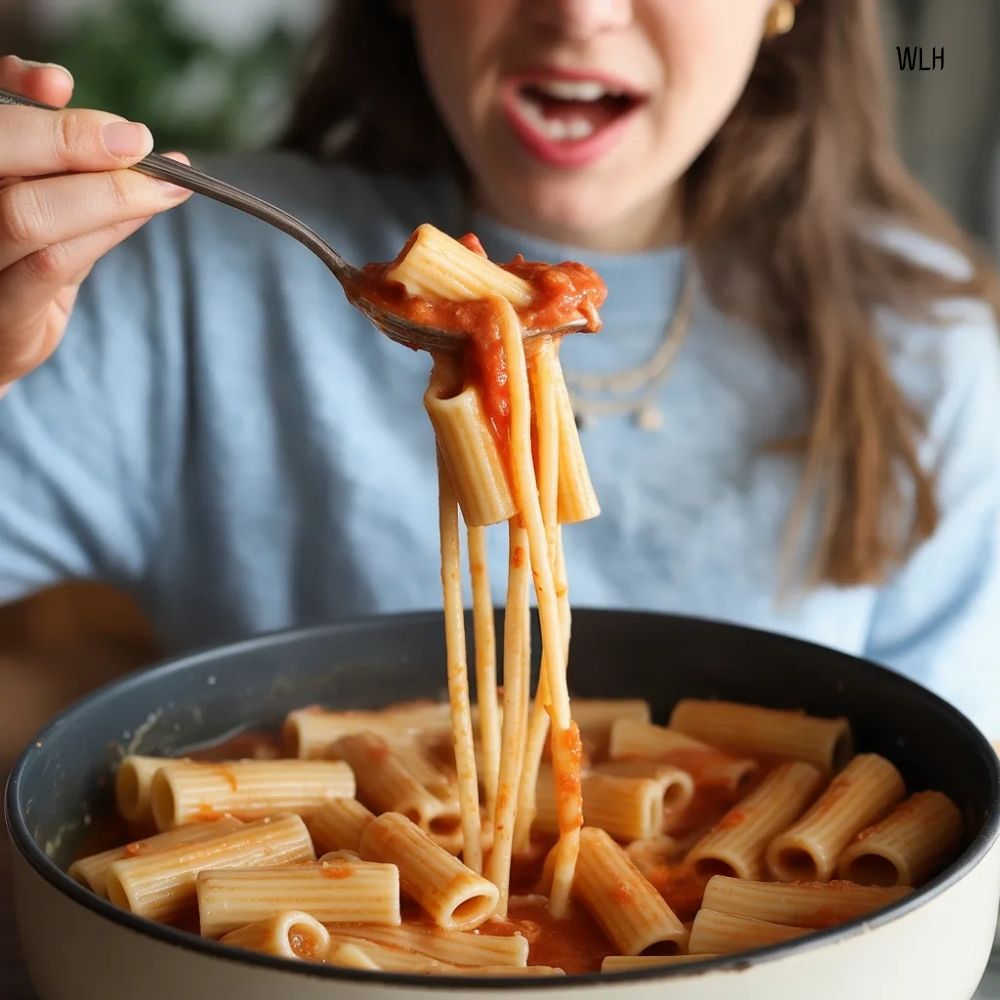
By the time I sat down to eat, the day already felt less heavy. The pasta was warm, creamy, and familiar in a way that didn’t demand commentary. Each bite was consistent. No surprises. No learning curve. Just food doing its job.
I ate slowly without meaning to, which is always a sign that something is working. The act of eating something you made yourself, with no pressure for it to be impressive, carries a quiet reassurance.
It signals completion. Something started and finished successfully, which is not nothing on a day where everything else felt unresolved.
The Recipe: Creamy Tomato Butter Rigatoni
This is the exact version I make when I need dinner to be reliable, grounding, and quietly supportive.
Ingredients
- Rigatoni pasta
- Butter
- Garlic cloves, finely chopped
- Tomato paste
- Heavy cream
- Salt
- Black pepper
- Pasta cooking water
- Optional grated parmesan, only if you want it
How I Make It When I Don’t Want to Think
I bring a large pot of salted water to a boil and cook the rigatoni until just tender, reserving a cup of the pasta water before draining. While the pasta cooks, I melt butter in a wide pan over medium heat, add the garlic, and let it soften gently until fragrant but not browned.
I stir in the tomato paste and let it cook for a few minutes until it darkens slightly and smells rich instead of sharp, then lower the heat and pour in the cream slowly, stirring until smooth.
I season with salt and pepper, add the drained pasta directly to the sauce, and loosen everything with pasta water until the texture feels right. I taste once, adjust if needed, and stop there. I do not chase perfection. I do not add complexity for the sake of it.
Why This Recipe Is Emotionally Safe
This dish is emotionally safe because it has no stakes. It does not demand that you enjoy the process or the result. It will be good as long as you show up and move things around occasionally. It does not punish distraction. It does not require enthusiasm.
On days when I feel raw or overstimulated, that predictability feels like support.
I now recognize this recipe as one of my quiet tools, not because it’s special, but because it’s dependable.
What I Took Away From the Experience
What surprised me was realizing how often I underestimate the effect of doing something small and contained with my hands. Cooking, when approached without ambition, can be regulating without being performative. It gives your body something rhythmic and purposeful to do while your mind catches up.
I didn’t set out to feel better. I set out to eat. Feeling better was a side effect. That distinction makes all the difference.
I now reach for familiar recipes more intentionally on bad days, not as a cure, but as a stabilizer. I don’t ask food to fix my emotions. I ask it to support me while they pass.
That feels reasonable. That feels adult.
Final Takeaway
I made this on a bad day, and it helped more than I expected, not because it was magical, but because it was steady. The cooking process absorbed my agitation. The food met my hunger without drama. The evening softened instead of spiraling.
Sometimes that is enough.
You don’t need every meal to inspire you. Some meals just need to hold you together until the day is over. And honestly, that might be the most valuable role food can play.